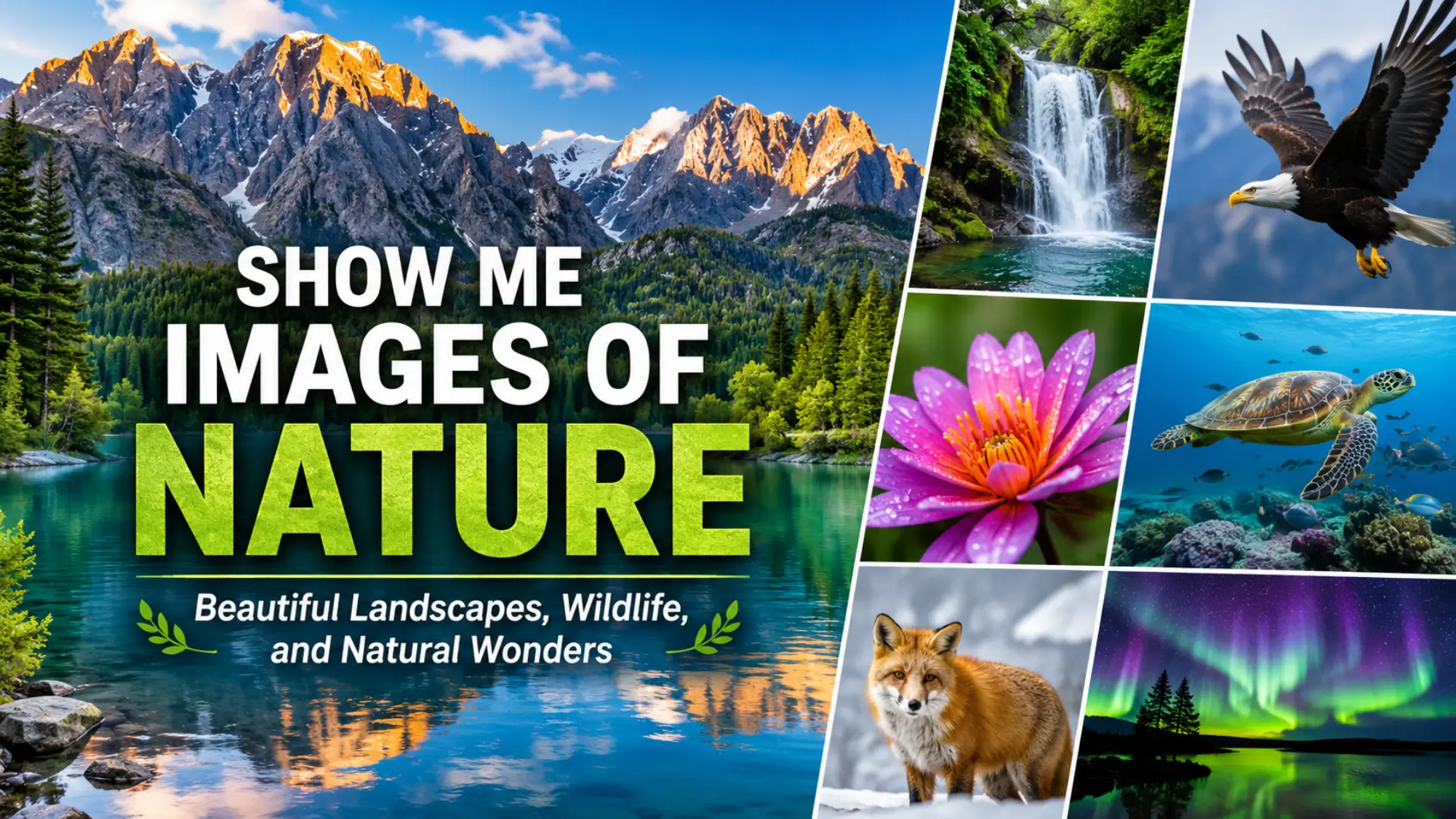
Show Me Images of Nature: Beautiful Landscapes, Wildlife, and Natural Wonders
If you want to show me images of nature, there is an enormous variety to explore. Nature photography can take you from snow-covered mountains and quiet forests to tropical beaches, dramatic waterfalls, wild animals, colorful flowers, and star-filled skies.
The best nature images do more than look beautiful. They capture a particular place, season, animal, or moment and give you a sense of what that environment feels like. The U.S. National Park Service maintains extensive photo galleries featuring landscapes, wildlife, plants, and other natural scenes, while photography platforms offer large collections for browsing and inspiration.
Beautiful Nature Images to Explore
Nature is too diverse to fit into a single style of photograph. Some images emphasize enormous landscapes, while others focus on tiny details such as flowers, insects, leaves, or water droplets.
Here are some of the most popular categories to explore.
Mountains and Valleys
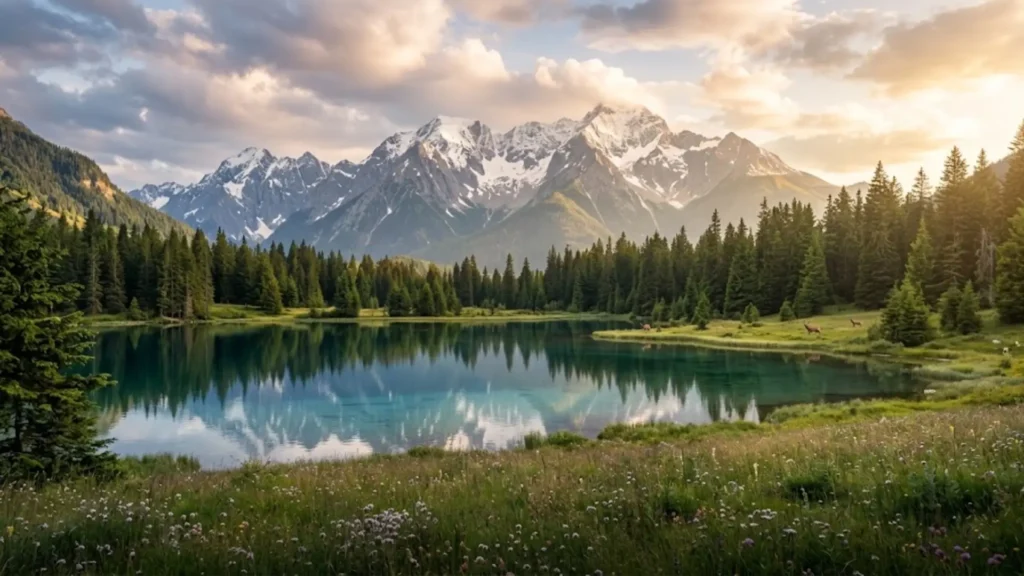
Mountain photography is popular because it combines scale, texture, weather, and dramatic scenery. A single photograph can show towering peaks, green valleys, snowfields, forests, and clouds.
Look for images featuring:
- Snow-covered mountain ranges
- Rocky peaks
- Alpine lakes
- Green valleys
- Mountain meadows
- Sunrise and sunset over peaks
- Mountains reflected in still water
The National Park Service’s landscape galleries include photographs from places such as Denali, Rocky Mountain, Glacier, and Grand Teton national parks.
Forests and Woodlands
Forest images can create an entirely different mood. Dense green forests, autumn woodland, misty trees, and sunlight passing through branches are particularly effective subjects.
Popular forest scenes include:
- Tall evergreen forests
- Autumn-colored woodland
- Moss-covered trees
- Foggy forests
- Sunbeams through trees
- Forest trails
- Old-growth woodland
These photographs are also useful when looking for calming desktop backgrounds, phone wallpapers, or visual inspiration.
Oceans, Beaches, and Lakes
Water adds movement and reflection to nature photography. Coastal photographs may show waves crashing against rocks, while lake photographs often emphasize reflections and surrounding mountains.
Beautiful water-based nature images can feature:
- Turquoise tropical water
- Rocky coastlines
- Quiet mountain lakes
- Waves at sunset
- Sea cliffs
- Beaches surrounded by natural scenery
- Reflections on calm water
For the strongest compositions, photographs often combine water with another major feature such as mountains, clouds, cliffs, or wildlife.
Waterfalls, Rivers, and Canyons
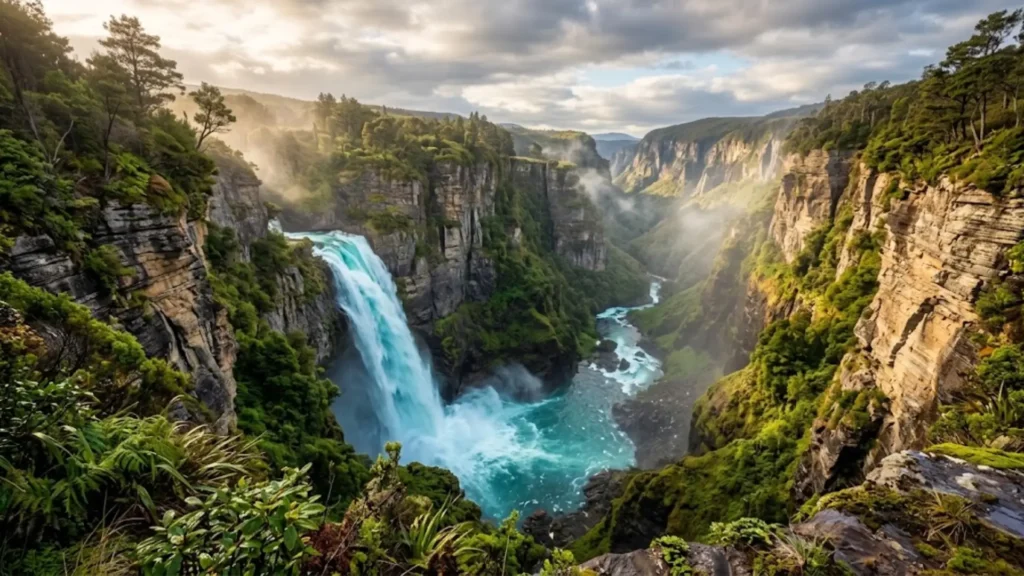
Waterfalls and rivers create photographs with natural movement. Long-exposure photography can make flowing water appear smooth and atmospheric, while faster shutter speeds can freeze individual drops.
Canyons provide the opposite effect: strong lines, enormous rock walls, shadows, and unusual geological formations.
The National Park Service highlights waterfalls, mountains, caves, glaciers, prairies, volcanoes, and other landscape types among the natural features found across U.S. national parks.
Wildlife in Natural Settings
Nature images are not limited to scenery. Wildlife photography lets viewers see animals in the environments where they naturally live.
Mammals and Birds
Some of the most memorable wildlife photographs show animals behaving naturally rather than posing for the camera.
Examples include:
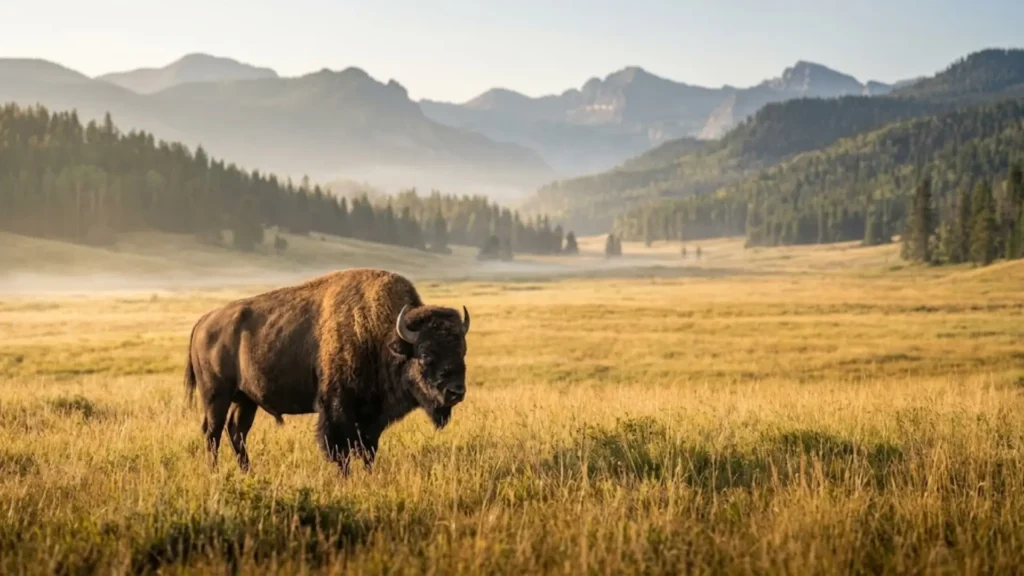
- Bison crossing a grassland
- Deer beside a forest
- Bears near a river
- Elk in mountain scenery
- Eagles in flight
- Birds perched on branches
- Foxes moving through snow
The National Park Service’s wildlife gallery includes subjects such as bison, coyotes, elk, mountain goats, bighorn sheep, alligators, and birds.
Marine Life
The ocean contains some of Earth’s most fascinating wildlife. Images of whales, dolphins, sea turtles, seals, penguins, colorful fish, and other marine animals can combine wildlife photography with spectacular underwater or coastal scenery.
Marine photographs are particularly effective when they show the animal in context rather than isolating it completely from its environment.
Insects and Small Creatures
Macro photography reveals a side of nature that can be easy to overlook.
Close-up photographs of butterflies, bees, dragonflies, spiders, beetles, and other small creatures can show details that are almost invisible at normal viewing distance.
A dew-covered insect, for example, can become a completely different photographic subject when captured with a macro lens.
Flowers, Plants, and Close-Up Nature Photography
Flowers and plants offer endless possibilities for nature photography because of their colors, shapes, textures, and seasonal changes.
Popular subjects include:
- Wildflowers
- Roses and garden flowers
- Tropical plants
- Cacti
- Ferns
- Autumn leaves
- Mushrooms
- Water droplets on leaves
- Close-up flower petals
The National Park Service maintains a dedicated collection of plant photographs alongside its landscape and wildlife galleries.
For a more artistic effect, photographers can use shallow depth of field so that one flower remains sharp while the surrounding vegetation becomes softly blurred.
Natural Wonders Worth Seeing in Pictures
Some natural scenes are so unusual that they immediately attract attention.
Think about:
- Glaciers
- Volcanoes
- Giant waterfalls
- Desert landscapes
- Canyons
- Geysers
- Caves
- Coral reefs
- Northern lights
- Dramatic cloud formations
- Bioluminescent environments
These subjects are valuable for visual discovery because they demonstrate how different Earth’s environments can look.
National parks provide particularly strong examples. The National Park Service describes its multimedia collection as a way to explore nature virtually through photographs, videos, sounds, and other experiences.
Where to Find More Nature Images
If you want to continue browsing after viewing a few examples, several established collections are useful starting points.
National Park Service Photo Collections
The U.S. National Park Service offers photo galleries organized around landscapes, wildlife, plants, individual parks, and other subjects. Its image library also allows users to search multimedia by location, media type, and text.
Keep in mind that the copyright status of individual National Park Service images can vary, so check the image’s specific rights information before downloading or republishing it.
Free Nature Photography Collections
For general browsing, Unsplash has large collections of nature and landscape photography. Its nature collection includes subjects such as forests, mountains, animals, beaches, flowers, and other outdoor scenes.
Its landscape collection is another useful starting point for people looking specifically for scenic mountain, lake, forest, and wilderness photographs.
Always check the current license and usage conditions before using an image commercially or republishing it.
How to Take Better Nature Photos
You do not need professional equipment to start photographing nature. A smartphone can produce excellent results when the subject, lighting, and composition work together.
Try these basic principles:
- Shoot during interesting light. Early morning and late afternoon can create softer, more directional light.
- Look for foreground interest. Rocks, flowers, branches, or water can add depth.
- Keep the composition simple. Remove distracting objects when possible.
- Watch the background. A beautiful subject can be weakened by a cluttered background.
- Photograph weather. Fog, clouds, rain, snow, and changing light can make familiar landscapes more dramatic.
- Be patient with wildlife. Natural behavior often produces better photographs than trying to force an encounter.
Wildlife photography also requires special care. The National Park Service recommends keeping a safe distance, staying quiet, and avoiding behavior that changes an animal’s natural activity. It also recommends using tools such as binoculars, spotting scopes, or telephoto lenses to observe wildlife without approaching too closely.
How to Choose the Right Nature Image
The best image depends on what you want to use it for.
| Purpose | Good Nature Image |
|---|---|
| Phone wallpaper | Vertical mountain, forest, ocean, or flower image |
| Desktop background | Wide landscape with open composition |
| Blog article | Horizontal image that directly supports the topic |
| Social media | Strong subject with clear visual focus |
| Photography inspiration | Dramatic light, wildlife, or unusual composition |
| Educational use | Clearly identifiable landscape, plant, or animal |
If you are selecting an image for a website, also consider its resolution, orientation, licensing requirements, and relevance to the surrounding content.
Frequently Asked Questions
Where can I see beautiful images of nature?
You can browse nature photographs through national park collections, photography websites, and image libraries. The National Park Service provides galleries covering landscapes, wildlife, plants, and individual parks, while platforms such as Unsplash offer extensive collections of nature and landscape photography.
What are the most popular types of nature images?
Popular categories include mountains, forests, beaches, oceans, waterfalls, lakes, wildlife, flowers, sunsets, deserts, and night skies. Landscape photography is particularly broad because it can combine several subjects, such as mountains, forests, rivers, and clouds, in one photograph.
Can I use nature images from the internet?
Not automatically. An image being publicly visible online does not necessarily mean you can republish it. Check the license or copyright information associated with the specific photograph before using it, especially for commercial websites, advertising, or printed materials.
What makes a nature photograph beautiful?
Composition, lighting, subject matter, timing, color, depth, and atmosphere all contribute. A technically perfect photograph is not necessarily the most compelling one. Often, an image becomes memorable because it captures an unusual moment, dramatic weather, interesting animal behavior, or a strong sense of place.
What is the best time to photograph wildlife?
Wildlife activity varies by species and location, but dawn and dusk can be productive periods. The National Park Service specifically recommends timing outings around periods when wildlife is most active while emphasizing safe observation practices.
Can I take good nature photos with a phone?
Yes. Modern phones can produce strong nature photographs, particularly in good light. Pay attention to composition, keep the camera steady, avoid excessive digital zoom, and move closer only when doing so is safe and appropriate.
How should I photograph wild animals safely?
Keep a respectful distance and avoid changing the animal’s behavior. Use a telephoto lens, binoculars, or a spotting scope when available. Wildlife should never be approached simply to obtain a closer photograph. Specific distance requirements can vary by species and location, so follow local park or wildlife-management rules.
Conclusion
Nature photography gives you a way to explore environments ranging from enormous mountain ranges to tiny flowers and insects. If you want to show me images of nature, start with the category that interests you most, whether that is landscapes, wildlife, forests, oceans, flowers, or extraordinary natural wonders.
For reliable collections, national park photo libraries are particularly useful, while photography platforms provide additional visual inspiration. If you plan to take your own photographs, focus on good light, simple compositions, patience, and responsible wildlife viewing. The most powerful nature images are often the ones that capture the environment as it really is.