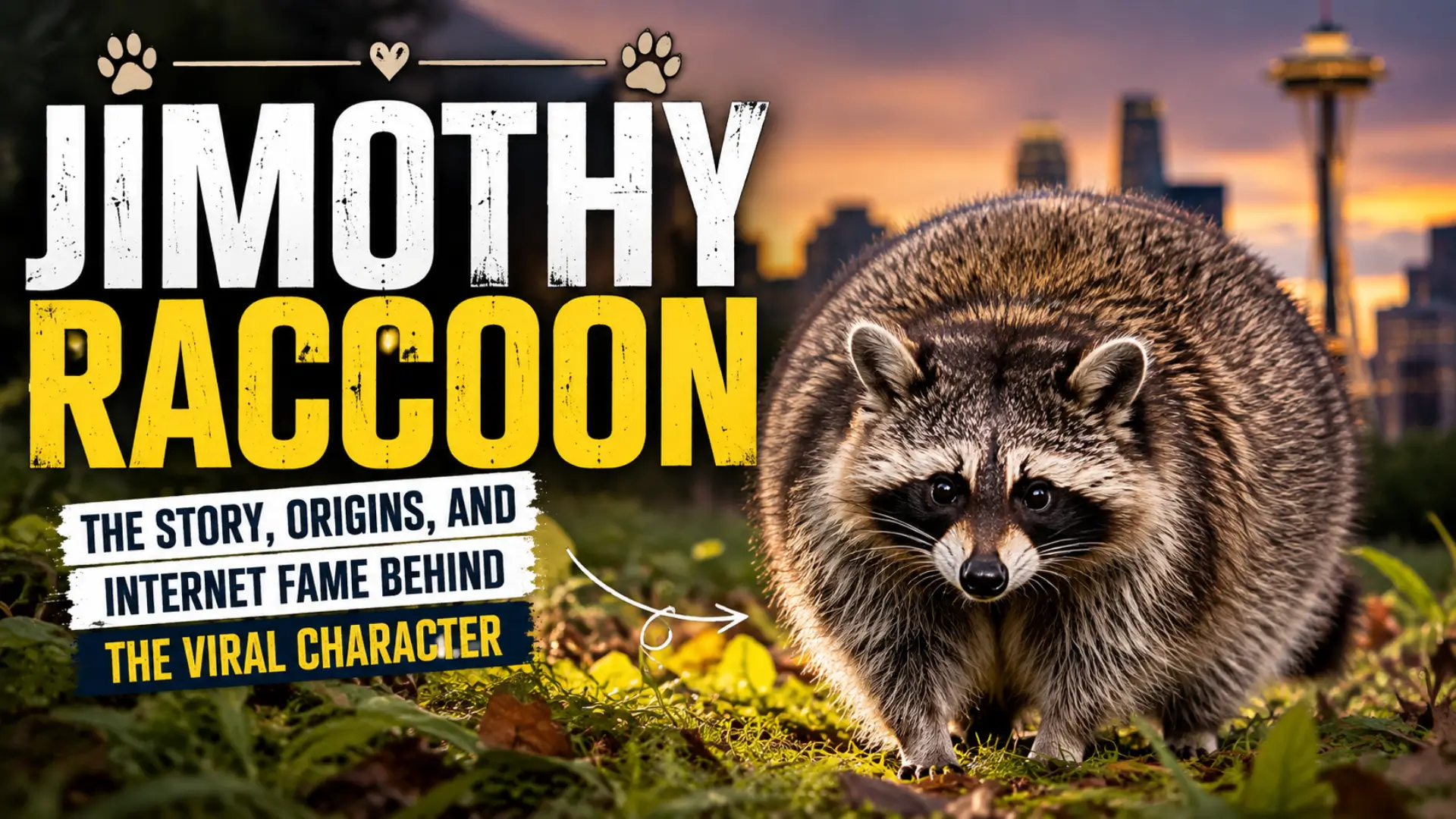
Jimothy Raccoon: The Story, Origins, and Internet Fame Behind the Viral Character
Jimothy Raccoon
If you have spent any time on social media during the summer of 2026, you may have come across a very unusual raccoon named Jimothy. Unlike most viral animals, Jimothy did not become famous because he belonged to a celebrity, performed a trick or appeared in a carefully produced video. He became famous simply because he looks different.
Jimothy is a wild raccoon associated with Seattle’s Ballard neighborhood. His unusually compact, rounded body and distinctive way of moving have attracted millions of views and inspired memes, fan art, merchandise and even appearances connected to the Seattle Mariners.
The story is surprisingly recent. A short Instagram video posted in July 2026 introduced Jimothy to a huge online audience, turning a neighborhood wildlife sighting into one of the internet’s most unexpected animal stories of the year.
Who Is Jimothy the Raccoon?
Jimothy is a wild raccoon that has been seen around Ballard in Seattle, Washington.
What immediately separates him from an ordinary raccoon is his unusual physical appearance. His body looks remarkably short and round, while his legs and head appear disproportionately prominent. In videos, he can be seen moving quickly across grass, sidewalks and stairs despite his unusual proportions.
Local residents appear to have known about the raccoon before he became an internet celebrity. One Ballard resident, Ben Trammell, said he had seen Jimothy and his family around his backyard for years and remembered seeing him when he was much younger.
That local history became an important part of the story because it showed that Jimothy was not simply an animal created for the internet. He was a real piece of Ballard wildlife long before millions of people knew his name.
Where Did the Name Jimothy Come From?
There is no complicated legend behind the name.
Jimothy was named by Kiana Hall, the Seattle resident who shared the video that helped make him famous.
Hall encountered the unusual raccoon and initially seemed unsure what she was looking at. Her video was accompanied by the memorable question, “What am I looking at?”
After recognizing that the animal was a raccoon with an unusual appearance, Hall referred to him as Jimothy. She later explained that there was not a deeper naming story. In essence, the raccoon simply looked like a Jimothy to her.
That casual name turned out to be perfect for the internet. Within days, “Jimothy” had become recognizable far beyond Ballard.
Why Does Jimothy Look So Different?
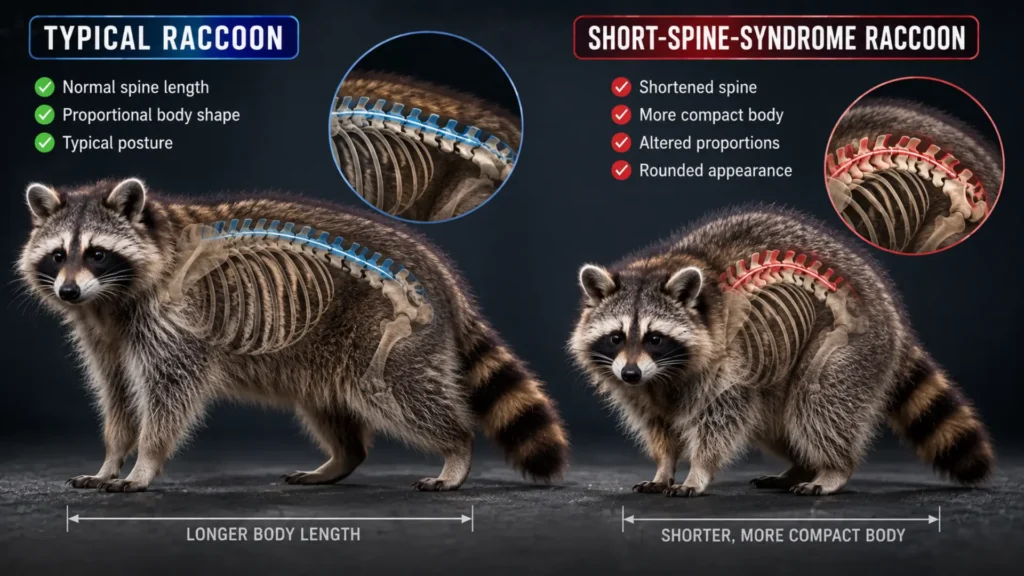
Jimothy’s appearance is believed to be connected to a rare congenital spinal condition commonly known as short spine syndrome.
The condition affects the development of the spine and can result in unusually short vertebrae, a compressed-looking body, a curved back and unusual proportions.
Experts who examined images and video of Jimothy have suggested that short spine syndrome or a similar spinal abnormality could explain his appearance. However, it is important not to confuse an expert assessment from photographs or video with a confirmed veterinary diagnosis.
What Is Short Spine Syndrome?
Short spine syndrome is an uncommon developmental abnormality in which the vertebrae do not develop normally. In affected animals, the shortened or compressed spine can dramatically change the animal’s proportions.
The result can look strikingly different from the normal body shape of the species.
Cases have been reported in several mammals, including dogs and other animals. Because the condition is so rare, there is limited information about how it affects individual wild animals over their entire lives.
Is Jimothy’s Condition Confirmed?
Not publicly, and that distinction matters.
News reports have generally described Jimothy as likely having short spine syndrome or a similar spinal abnormality, rather than presenting a confirmed clinical diagnosis.
Wildlife experts who discussed the videos said his physical appearance is consistent with such a condition, but a definitive diagnosis would normally require a proper veterinary examination.
So, while “Jimothy has short spine syndrome” became common shorthand online, the more accurate description is that experts believe his unusual appearance is probably associated with a congenital spinal abnormality.
How Jimothy Became an Internet Sensation
Jimothy’s rise to fame happened remarkably quickly.
In July 2026, Kiana Hall filmed a short clip of the unusual raccoon in Seattle’s Ballard neighborhood. She posted it to Instagram on July 14.
The clip was extremely short, but the animal’s appearance immediately grabbed people’s attention.
Viewers were confused by the creature’s proportions. Some initially struggled to identify it as a raccoon at all. Once people realized what they were seeing, the video began spreading rapidly.
Within days, the clip had accumulated millions of views, and Jimothy moved from a local wildlife sighting to a national internet story.
The Original July 2026 Video
The original video worked because it was simple.
There was no elaborate production, no scripted joke and no celebrity endorsement. It was essentially a person encountering an unusual wild animal and asking what she was seeing.
That authenticity helped make the footage highly shareable.
As the original clip spread, people began posting their own reactions, jokes and interpretations. The raccoon was compared to everything from a cartoon creature to a cryptid.
The combination of a genuinely unusual animal, a memorable name and a short, easy-to-share video gave Jimothy the ingredients for an internet phenomenon.
Seattle Residents Join the Story
One of the most interesting parts of the Jimothy phenomenon was the discovery that local residents had seen him before his viral moment.
After the original video spread, people around Ballard began sharing older footage and memories of the raccoon.
Ben Trammell, for example, described seeing Jimothy when he was younger and said his family had used nearby yards as part of their nighttime movements.
That footage helped transform Jimothy from a strange viral clip into a character with a sense of history.
People were no longer simply asking, “What is that animal?”
They were asking what happened to him before the internet discovered him.
Why People Became So Obsessed With Jimothy
Jimothy’s popularity is partly about his appearance, but that does not explain the entire phenomenon.
The internet has a long history of turning unusual animals into celebrities. What makes Jimothy particularly effective as an online character is that his appearance is instantly recognizable.
His compact body and distinctive movement can be understood visually without explanation.
Then there is the name.
“Jimothy” sounds like an intentionally humorous human name for an animal that looks almost cartoonish. The contrast between the serious-looking raccoon and the ordinary human name made the character easy to meme.
Fans quickly created illustrations, jokes and references based on his silhouette.
His story also arrived during a period when audiences were increasingly skeptical of artificial or heavily edited internet content. Jimothy’s original footage was a spontaneous recording of a real wild animal, which gave the phenomenon an appealing sense of authenticity.
From Viral Raccoon to Seattle Celebrity
Jimothy’s fame did not remain limited to Instagram.
His image and name began appearing throughout Seattle’s online culture, while local residents and businesses embraced the unexpected celebrity.
The Seattle Mariners were among the most visible organizations to join the phenomenon.
Jimothy and the Seattle Mariners
Jimothy made an appearance in the Mariners’ famous Salmon Run mascot race at T-Mobile Park in July.
The team also embraced the character through social media and later organized Jimothy-themed activities at the ballpark.
At an August 2026 Jimothy-themed event, fans received Jimothy trading cards, while promotional merchandise and stadium graphics helped turn the viral raccoon into a temporary sports celebrity.
The event demonstrated just how quickly Jimothy had moved beyond animal videos and into Seattle pop culture.
Memes, Fan Art and Online Culture
As Jimothy’s popularity grew, fans began creating their own versions of the character.
His unusual silhouette made him easy to recognize in drawings, memes and other internet creations.
Some people treated him like a traditional celebrity mascot. Others portrayed him as a mysterious creature or a fictional superhero.
This fan participation helped extend the original viral moment. Instead of depending on one video, Jimothy became a recognizable internet character that people could reinterpret.
That is one of the major reasons the Jimothy story spread so quickly.
Jimothy Appears in Roku City
The phenomenon eventually reached beyond social media and sports.
In August 2026, Jimothy appeared as an Easter egg inside Roku City, Roku’s familiar virtual cityscape and screensaver environment.
Roku’s creative team incorporated a recognizable version of Jimothy into the digital environment, effectively placing the Seattle raccoon inside a platform used by millions of people.
The appearance was another sign that Jimothy had become more than a local wildlife curiosity. His silhouette had become recognizable enough to work as a piece of mainstream internet culture.
Is Jimothy Healthy?
From the available footage, Jimothy appears capable of moving around his environment, climbing and foraging.
Wildlife researchers have noted that he appears to be functioning reasonably well despite his unusual physical condition.
That does not mean his long-term health can be determined from social media videos.
A congenital spinal abnormality can have different effects depending on its severity, and Jimothy has not been publicly examined in a way that would allow the public to know his complete medical condition.
His survival in the wild is nevertheless notable. Experts have pointed out that raccoons are highly adaptable animals, and their intelligence, dexterity and flexible diets can help them survive in challenging urban environments.
Should People Try to Find or Feed Jimothy?
This is one of the most important parts of the story.
Jimothy may be famous, but he is still a wild animal.
Wildlife experts have warned that people should not chase him, approach him closely or attempt to make him dependent on human attention or food.
When a wild animal becomes famous, increased human activity can create new risks. A crowd looking for Jimothy could disturb him, alter his behavior or make him more comfortable around people.
Researchers have therefore emphasized giving him space and allowing him to continue living as a wild raccoon rather than treating him like a public pet or attraction.
Frequently Asked Questions
Who is Jimothy the raccoon?
Jimothy is a wild raccoon associated with Seattle’s Ballard neighborhood. He became famous in July 2026 after Kiana Hall posted a short Instagram video showing his unusually compact, round body and distinctive movement.
Why is Jimothy so round?
Experts believe Jimothy’s unusual proportions may be caused by a congenital spinal abnormality commonly known as short spine syndrome. However, a definitive public veterinary diagnosis has not been established.
Who named the raccoon Jimothy?
Seattle resident Kiana Hall gave the raccoon the name Jimothy after encountering him in Ballard. She later explained that the animal simply looked like a “Jimothy” to her.
When did Jimothy become famous?
Jimothy went viral in July 2026 after Hall posted an Instagram video of him on July 14. The short clip quickly spread across social media and generated millions of views.
Does Jimothy have short spine syndrome?
Jimothy is widely described online as having short spine syndrome, but the more cautious description is that experts believe he may have the condition or a similar congenital spinal abnormality. A confirmed diagnosis has not been publicly documented.
Where does Jimothy live?
Jimothy has been associated with the Ballard neighborhood of Seattle, Washington. Because he is wild, people should avoid trying to locate, approach or feed him.
Why did Jimothy become so popular?
His unusual appearance made him instantly recognizable, while his humorous name and spontaneous origin story made the videos highly shareable. Fans then expanded the phenomenon through memes, artwork and other creative posts.
Did the Seattle Mariners really feature Jimothy?
Yes. The Mariners embraced the viral raccoon in 2026, including featuring a Jimothy character in the team’s Salmon Run mascot race and later holding Jimothy-themed activities at T-Mobile Park.
Final Thoughts on Jimothy Raccoon
The Jimothy Raccoon story is a perfect example of how quickly an ordinary moment can become extraordinary on the modern internet.
A few seconds of footage from a Seattle backyard introduced millions of people to a raccoon with an unusual appearance and an unexpectedly memorable name. From there, Jimothy became a source of memes, fan art, local pride, sports entertainment and even a digital Easter egg.
But beneath the jokes is a real wild animal whose unusual body may be the result of a rare congenital condition.
That distinction is worth remembering. Jimothy can be enjoyed as an internet phenomenon without forgetting that he is still wildlife. His most interesting story may ultimately be the simplest one: a uniquely adapted raccoon was living his normal life in Seattle long before the internet noticed him.